

CLOUD_NATIVE_SAAS // INFRASTRUCTURE_ENGINEERING // CROSS_PLATFORM_DELIVERY // DATA_RESIDENCY_COMPLIANCE // AVAILABILITY_ZONE_REDUNDANCY // ENCRYPTION_AT_REST // IDENTITY_ACCESS_MANAGEMENT // SYS-STATE: FULL_PRODUCTION // OPERATIONAL_CONTINUITY
CLOUD_NATIVE_SAAS // INFRASTRUCTURE_ENGINEERING // CROSS_PLATFORM_DELIVERY // DATA_RESIDENCY_COMPLIANCE // AVAILABILITY_ZONE_REDUNDANCY // ENCRYPTION_AT_REST // IDENTITY_ACCESS_MANAGEMENT // SYS-STATE: FULL_PRODUCTION // OPERATIONAL_CONTINUITY
| Research & Analysis
Strategic Insights

Research, analysis, and technical perspective structured for consequential decisions across security, infrastructure, and institutional technology.

Enforcing Least Agency at Machine Speed
You provision an AI agent. You lock it down. You assign it a strictly scoped IAM (Identity and Access Management) role. You assume your architecture is resilient.
You are wrong.
Security models built for human operators fundamentally break when applied to autonomous systems. Human identity proves intent. Machine identity only proves execution capability. When an AI agent reads external data, it absorbs the intent of that data. If that data is malicious, the agent executes the attacker’s payload using its own high-privilege credentials. This is the "Confused Deputy" problem operating at machine speed.
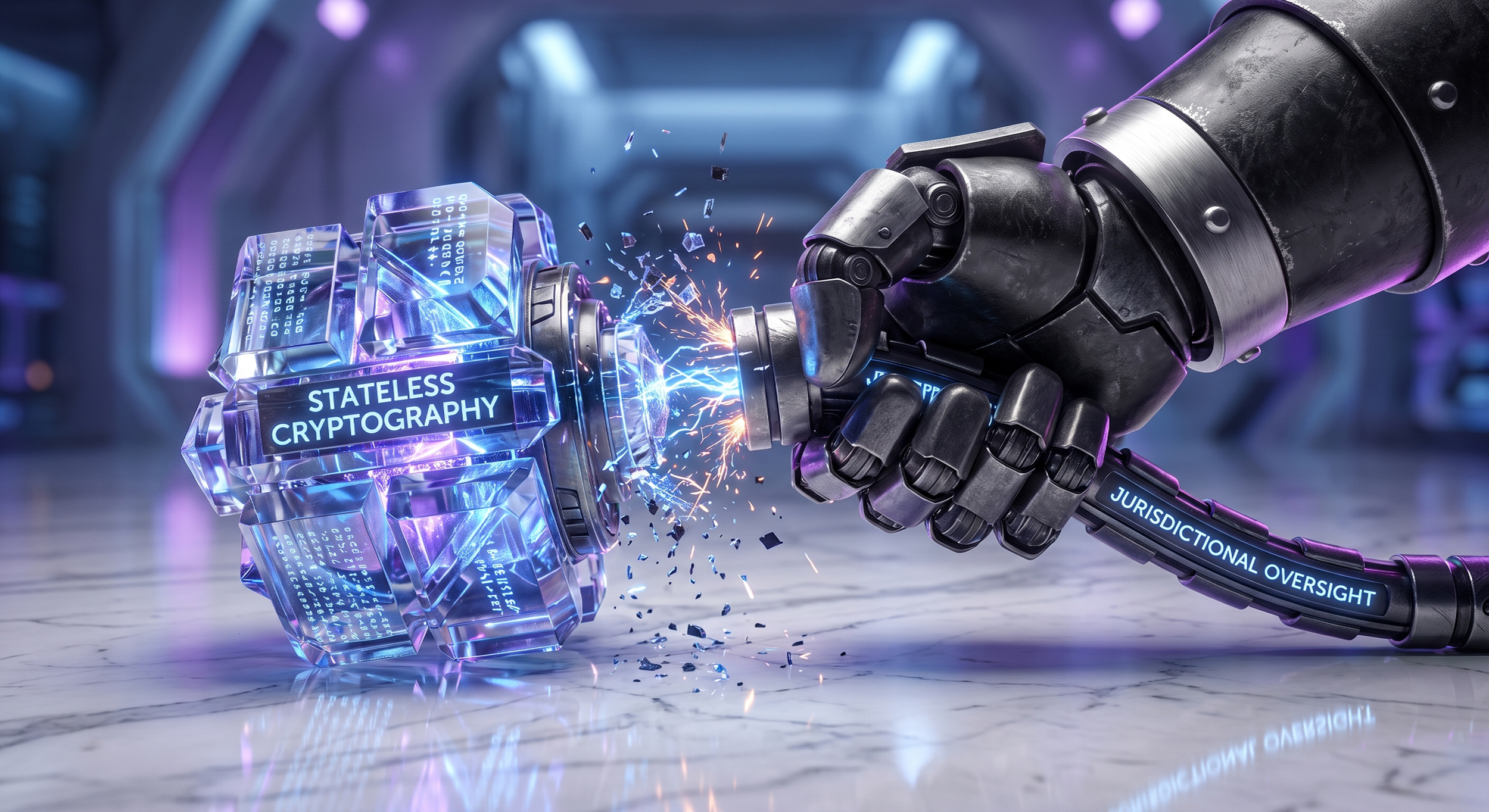
The Lethal Hubris of Stateless Cryptography: Architecting Real Sovereignty
There is a seductive idea in modern architecture: that with enough cryptography, you can owe nothing to anyone. Encrypt every byte. Move onto decentralized rails. Settle in trustless assets. Become, in effect, an island — self-contained, dependent on no counterparty and no shared infrastructure.
It is a genuinely appealing vision. It is also philosophically incoherent. Sovereignty from whom, exactly? You still run on silicon someone fabricates, cross networks someone operates, and settle in value someone issues. There is no island. The lethal hubris is not using strong cryptography — it is believing cryptography dissolves interdependence.