

CLOUD_NATIVE_SAAS // INFRASTRUCTURE_ENGINEERING // CROSS_PLATFORM_DELIVERY // DATA_RESIDENCY_COMPLIANCE // AVAILABILITY_ZONE_REDUNDANCY // ENCRYPTION_AT_REST // IDENTITY_ACCESS_MANAGEMENT // SYS-STATE: FULL_PRODUCTION // OPERATIONAL_CONTINUITY
CLOUD_NATIVE_SAAS // INFRASTRUCTURE_ENGINEERING // CROSS_PLATFORM_DELIVERY // DATA_RESIDENCY_COMPLIANCE // AVAILABILITY_ZONE_REDUNDANCY // ENCRYPTION_AT_REST // IDENTITY_ACCESS_MANAGEMENT // SYS-STATE: FULL_PRODUCTION // OPERATIONAL_CONTINUITY
| Research & Analysis
Strategic Insights

Research, analysis, and technical perspective structured for consequential decisions across security, infrastructure, and institutional technology.

The Liability of Efficiency: Defending the Single Pane of Glass
The multi-million-dollar "single pane of glass" your IT leadership bought to increase efficiency is now an existential liability. Centralized orchestrators were designed to reduce friction. They allow small teams to manage massive fleets of global infrastructure. This efficiency is precisely what makes them targets. Adversaries understand system dynamics. They no longer waste time breaching individual edge nodes. They compromise the centralized management plane. When the orchestrator falls, the entire fleet falls with it.

The Runtime Reality: Why Static Defenses Failed AI Tooling
The organization adopted modern AI tooling to accelerate development. Engineering directors assumed perimeter controls secured the local node. You relied on static filters to intercept malicious packages during installation. You were wrong.
On July 11, 2026, attackers compromised an npm publishing credential and pushed five malicious versions of the jscrambler package — a package maintained by a security vendor, downloaded roughly 15,800 times a week. They did not exploit a zero-day vulnerability. When attackers defeated npm v12's static blocks within three days of its release, they proved that securing AI-augmented developer environments requires zero-trust runtime sandboxing, not source-code verification.

The 2030 Cryptographic Execution Date: Engineering Fiduciary Survival
The transition to Post-Quantum Cryptography (PQC) is widely misunderstood. Organizations treat it as a distant physics problem. They assume it is a simple software update reserved for the next decade.
This assumption is legally dangerous. The threat is not theoretical. It is regulatory, and it is immediate.

Enforcing Least Agency at Machine Speed
You provision an AI agent. You lock it down. You assign it a strictly scoped IAM (Identity and Access Management) role. You assume your architecture is resilient.
You are wrong.
Security models built for human operators fundamentally break when applied to autonomous systems. Human identity proves intent. Machine identity only proves execution capability. When an AI agent reads external data, it absorbs the intent of that data. If that data is malicious, the agent executes the attacker’s payload using its own high-privilege credentials. This is the "Confused Deputy" problem operating at machine speed.

The Lethal Hubris of Stateless Cryptography: Architecting Real Sovereignty
There is a seductive idea in modern architecture: that with enough cryptography, you can owe nothing to anyone. Encrypt every byte. Move onto decentralized rails. Settle in trustless assets. Become, in effect, an island — self-contained, dependent on no counterparty and no shared infrastructure.
It is a genuinely appealing vision. It is also philosophically incoherent. Sovereignty from whom, exactly? You still run on silicon someone fabricates, cross networks someone operates, and settle in value someone issues. There is no island. The lethal hubris is not using strong cryptography — it is believing cryptography dissolves interdependence.

The Phantom Identity: Surviving ConsentFix and the Agentic Perimeter
The organization relies on static perimeters. You deploy hardware tokens. You disable legacy authentication. You enforce rigorous password hygiene. These basic mitigations are necessary. They stop brute-force attacks. They filter out automated noise. But against a motivated adversary, they are entirely insufficient.
Your users are no longer typing passwords into poorly cloned websites. They are executing legitimate authentication flows. They are handing valid session tokens directly to adversarial infrastructure. They do this in three seconds flat. The resulting breach generates zero failed login attempts. It triggers zero conditional access alerts. The infrastructure operates exactly as designed.

The Hardware Betrayal: Why Cryptographic Trust Cannot Stop the Boardroom Proxy
The attack that cripples your operational network will not require a complex zero-day exploit. It will tunnel silently through the boardroom smart TV.
The perimeter is already gone. Threat actors do not break in from the outside anymore. They log in through trusted hardware on the inside. For years, the security industry prioritized cryptographic identity. We built vast Public Key Infrastructures (PKI). We issued certificates to every endpoint. We assumed that if a device could mathematically prove its identity, its traffic was safe. This assumption is mathematically bankrupt.

The Compliance Latency Trap: Architecting Fiduciary Defenses Against 22-Second Handoffs
Threat intelligence firms detect vulnerabilities an average of 41.64 days before they appear in CISA's KEV catalog. Median time from disclosure to exploit collapsed from 771 days in 2018 to just 6 days in 2023. Ransomware affiliates can execute a network handoff in exactly 22 seconds. A 28-day advantage in threat intelligence yields an estimated $518,000 in avoided risk per incident. Legal standards for corporate duty of care are shifting from post-breach compliance to pre-mandate resilience.

Human-on-the-Loop: A New Doctrine for Machine-Speed Survival
The 'Human-in-the-Loop' security model is now a liability. We analyze why AI attack velocity mandates a shift to autonomous containment, trading control for survival.

The Enemy Is Not at the Gates. It's in the Kernel.
For the last decade, security architecture has been defined by a simple, powerful idea: Zero Trust. The model correctly assumes the network is hostile and mandates that no actor, human or machine, is trusted by default. Every access request must be authenticated and authorized. This was a necessary and rational evolution from the failed perimeter model.

Compute Sovereignty: Your AI Strategy is Built on Borrowed Land
The global race for artificial intelligence superiority is framed as a contest of algorithms and data. This is a dangerous misdirection. The defining constraint is, and will remain, access to specialized compute. Today, that access is overwhelmingly mediated through a single architecture—the Graphics Processing Unit (GPU)—whose supply chain is geographically concentrated and politically fragile. This monoculture is not an asset; it is a critical vulnerability.

The Semantic Debt Bubble: A Crisis of Assurance for AI-Generated Code
Your development teams are adopting AI code-assistants at an unprecedented rate. The productivity gains appear undeniable. Yet beneath the surface of this velocity, a new and insidious form of technical debt is accumulating across your organization. This is not the familiar debt of messy code or missing documentation. This is semantic debt: a portfolio of syntactically perfect, plausible-looking code that is logically flawed in subtle, non-obvious ways.
Our current quality assurance paradigms—unit tests, integration tests, and even human code review—are not designed to detect this new class of error. They check for predictable failures, not for the silent misinterpretation of intent. This creates a growing bubble of latent vulnerabilities, ticking like a time bomb inside your most critical applications. The question is no longer if you can afford to use AI assistants, but how you will manage the systemic risk they introduce.

Regulated Finance: Architecting Security Beyond Compliance
The financial sector faces an unprecedented confluence of advanced cybercrime, increasingly stringent regulation, and the inherent complexities of digital assets. From record-setting fines against crypto platforms to sophisticated cross-border fraud schemes, the operating environment demands a fundamental re-evaluation of security postures. The stakes are immense: operational stability, market integrity, and customer trust hang in the balance. In this landscape, a strategic investment in transparent, collaboratively secured, and blockchain-native financial infrastructures is no longer optional for regulated finance.

The Trust Architecture: Safeguarding Institutional Digital Assets
The digital asset landscape is undergoing a profound transformation. Institutional capital is flowing in at an unprecedented rate, from sovereign wealth funds exploring Bitcoin allocations to traditional financial giants building bespoke crypto custody solutions. This seismic shift brings immense opportunity, but it also elevates the stakes. Safeguarding billions in digital assets requires a security paradigm far beyond legacy practices. Building enduring trust in institutional digital assets demands technically rigorous, resilient, and regulator-aware architectural patterns for security and assurance. This article explores the imperative for this advanced approach, detailing the core technologies and processes that define next-generation digital asset security.
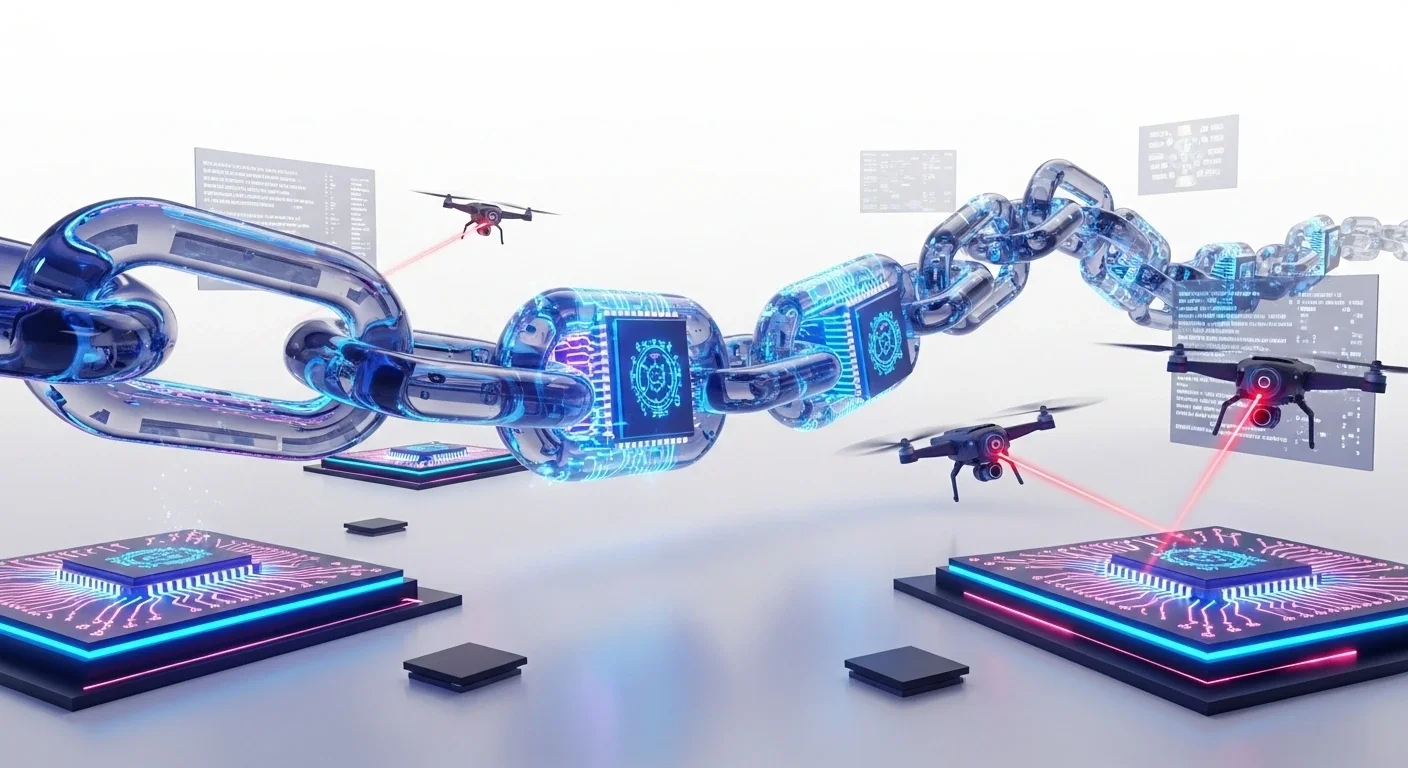
Continuous Validation: Building Trust in Your Digital Chain
The stakes in cybersecurity have never been higher. As global ransomware and supply chain attacks intensify, organizations face a critical inflection point: rely on traditional defenses that are demonstrably failing, or embrace proactive, continuous validation. At Lucenor, we believe that proactive, continuous validation via Breach and Attack Simulation (BAS) and stringent supply chain security are foundational to counter the persistent failure of conventional defenses against sophisticated cyberattacks. This is not merely an operational concern; it’s a strategic imperative for the C-suite, directly impacting resilience, reputation, and market standing.

Resilience Lessons from Cairo’s Ramses Central Exchange Fire
On 7 July 2025, an equipment‑room blaze at Egypt’s Ramses Central exchange caused national internet connectivity to dip to ≈ 62 % of ordinary levels, according to real‑time telemetry from NetBlocks.

FHE crossed the chasm—let’s move real data, not just toy integers
Last year fully homomorphic encryption (FHE) felt like a moon-shot; this year it’s a power tool. ISO has a draft standard on the street, Zama’s Rust stack screams on GPUs, and bootstraps run an order of magnitude faster than they did in 2023. That’s enough lift for production pilots in banking, healthcare, and AdTech. Lucenor’s take: when the math finally bends to operational reality, you ship—secure-by-design, zero-trust baked in. Below is the state-of-play and a hands-on demo that manipulates encrypted ASCII strings instead of the usual “8 + 5” cliche. But first..

Shadow IT in the Fast Lane: Lessons From Regulated Giants for AI, Healthcare & Crypto
Shadow IT—the apps, devices, and cloud services teams spin up outside official channels—has become a parallel empire inside most companies. Gartner pegs the spend at 30–40% of total IT budgets. Worse, nearly half of recent breach investigations trace the first foothold back to shadow IT.

When the Model Lies: Observability, Risk & AI Transparency
A Canadian traveller, Jake Moffatt, asked Air Canada’s website chatbot whether bereavement fares could be claimed after travel. The bot invented a 90-day refund window, Mr Moffatt bought a CA \$1600 ticket where he should’ve paid CA \$760, and the airline later refused to honour the promise. In February 2024 A civil tribunal ruled the answer “misleading” and ordered Air Canada to reimburse the fare, interest, and costs—more than CA \$812 in damages. One hallucination became a legal court case, caused reputational damage, and about CA \$1,000,000 in indirect costs. That story is no longer an outlier. LLM errors are creeping into contracts, trading systems, and operational dashboards. The common thread: a lack of deep observability.

Beyond Blockchains: Zero-Knowledge Proofs for Everyday IT
Web3 may have made zero-knowledge proofs headline-worthy, but the math was never chained to blockchains. In 2025, regulatory pressure for privacy-by-design, relentless credential breaches, and the march toward zero-trust all push mainstream IT to adopt ZKP as a native control—long before most enterprises even mint a token. This post walks through the cryptographic intuition (with approachable numbers), showcases five Web2-centric use-cases that are shipping today, and explains how Lucenor’s applied-cryptography engineers translate elegant theory into hardened systems.